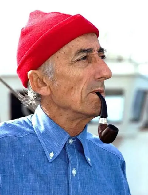
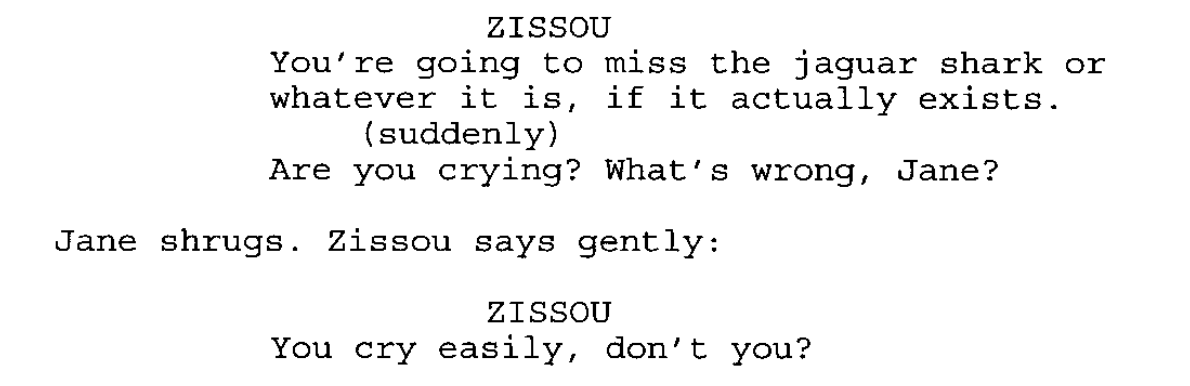
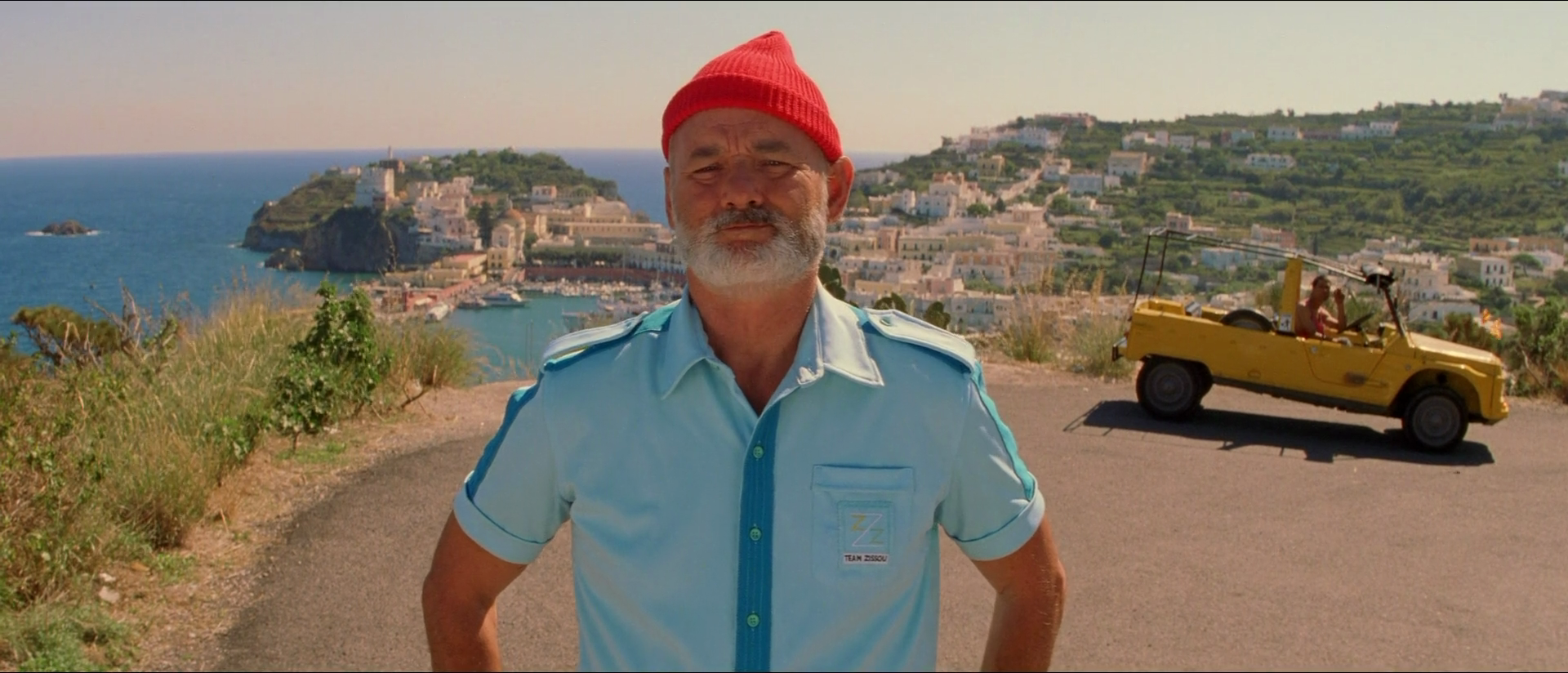
We're told Steve Zissou is based on Jacques Cousteau. It's obvious, right? Look at that red cap. The film is dedicated to him. Case closed.
Or is it? If you peel back the red cap you'll find that Zissou has as much Percy Fawcett DNA as Cousteau.
I read about Fawcett in David Grann's book The Lost City of Z. The first connection to The Life Aquatic raised my antennae. The clues kept coming, prompting me to rewatch the film and write this essay.
First: Who Is Percy Fawcett?
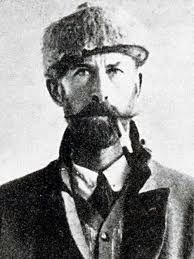
Percy Fawcett was amongst the last of the "individualist explorers." As Oseary Drakoulias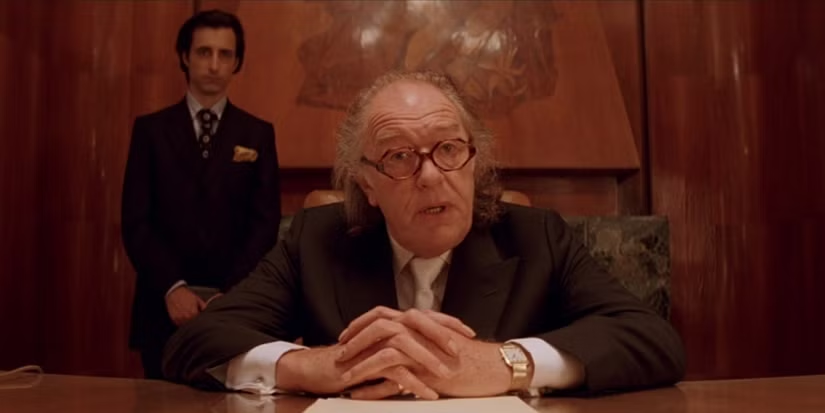 puts it: "We're the last of a dying breed."
Fawcett made seven expeditions to explore the Amazon between 1906 and 1924. Eleanor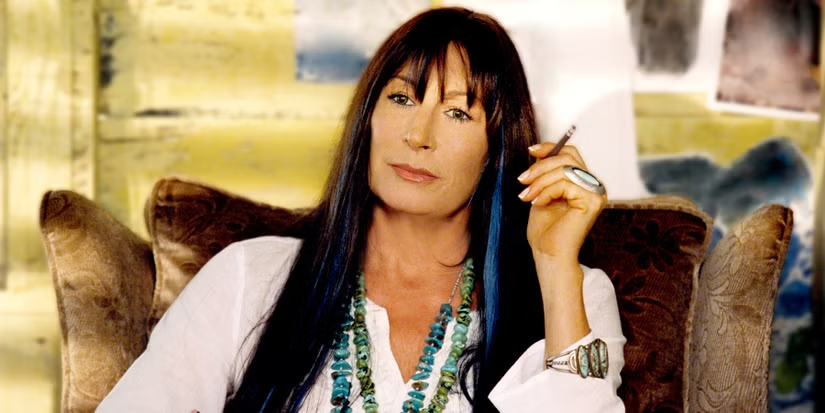 might say "He spent half his life
 underwater in the jungle."
Like Zissou and unlike Cousteau, he had an obsession. An obsession that had cost him friends and prompted him into dangerous decisions. His Jaguar Shark was the Lost City of Z: a mythical civilization hidden somewhere in the Amazon. Fawcett doubted at times if it even existed…
In 1925, Fawcett set out on one last underfunded, undermanned expedition to find Z. Desperate for manpower, he brought his twenty-one-year-old son Jack for the first time ever. They walked into the Amazon and were never seen again.
David Grann's book The Lost City of Z: A Tale of Deadly Obsession in the Amazon (Doubleday, 2009) introduced me to Fawcett.
The Rival
Cousteau had a rival but it was a lopsided rivalry at best. Fawcett, on the other hand, was hounded by his rival throughout his career. Fawcett and his rival were in the same jungle at the same time. Competing for the same grant money. Racing to the next discovery. Fawcett was often anxious that his rival would discover the lost city of Z before he did.
That rival was Dr. Alexander Hamilton Rice Jr., a multimillionaire surgeon-turned-explorer who, in David Grann's words, was "as much at home in the elegant swirl of Newport society as in the steaming jungles of Brazil."
Do we know a character like that?

Rice mounted expeditions with enormous teams of specialists and the latest technology. He was obsessed with gadgetry. He carried into the jungle wireless telegraphy, custom-designed boats, and eventually a hydroplane. (None of his expedition manifests mention an espresso machine.) He drew on what Grann calls his "bottomless bank account" to assemble expeditions that dwarfed anything Fawcett could put together.
Peep this: Rice christened his custom-built expedition boat the Eleanor II, after his wife Eleanor (!!) a socialite who accompanied him on several expeditions.
Zissou on Hennessey quotes: "He's charismatic." • "He hogs up all the grant money." • "He used to be married to Eleanor."
Boom. That's a mighty strong connection. More of a crouton than a breadcrumb. The breadcrumbs don't end there:
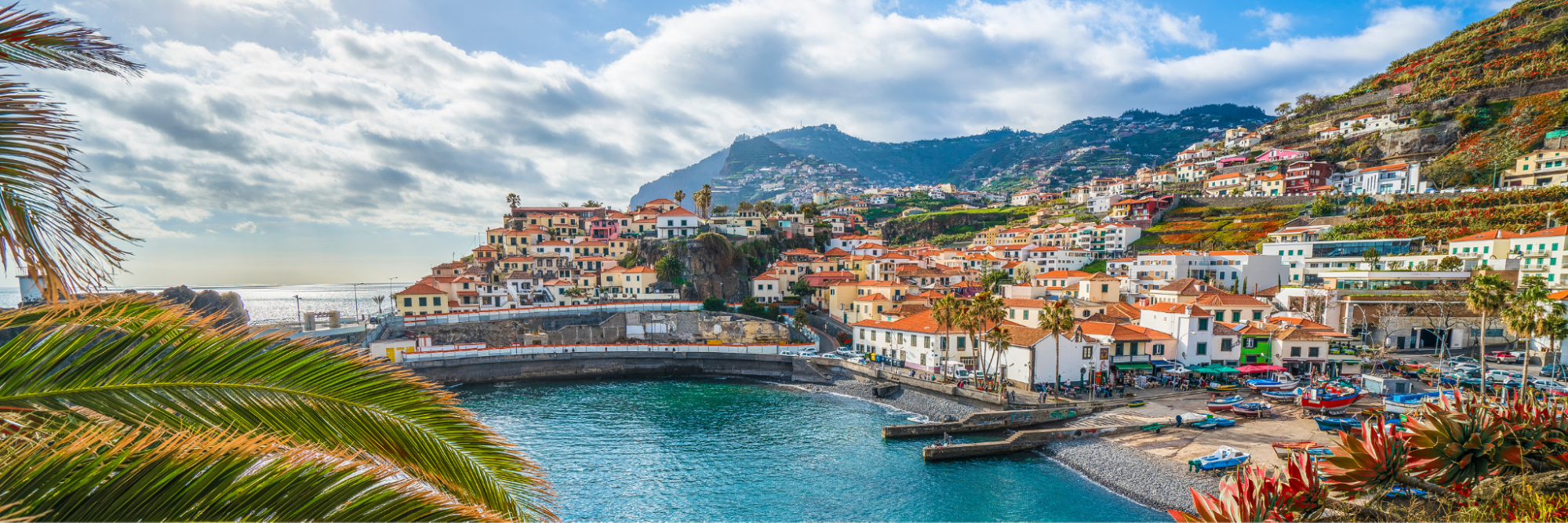
When Fawcett disappeared in the Amazon, his wife Nina was living in Madeira, Portugal. As Grann describes it: a tall, impeccably dressed man appeared at her doorstep. It was Fawcett's longtime rival, Dr. Rice. He had come to console her, and assured her that Fawcett would find a way to escape.
Now, what was this man doing calling on Fawcett’s wife on a remote island off the coast of Portugal?
Hennessy quotes: “Here comes our girl.” • “I just became a knight. In Portugal.”
Anti-Hero. Washed Up.
Ryan Leston sums up Zissou thusly: "Essentially, Zissou is the antihero in every way. He's a washed-up has-been taking his last throw of the dice on what could possibly be the world's most expensive wild goose chase."
Does this sound like Cousteau, a legend celebrated to the very end? Or does it sound like this type of guy:
After the war, he tried to raise funds for an expedition to find Z, but he met resistance from the new professionals of archaeology, who were supplanting the role of explorers, and who considered Fawcett an anachronism.
— David Grann, The Lost City of Z
Both Fawcett and Zissou are men who were once respected but are now seen as embarrassing. Both operate on dwindling budgets, making do with old gear and loyal misfits. Both are considered eccentric, undisciplined, and "off-protocol." Both are motivated more by glory, vanity, adrenaline, rather than institutional science.
When they lose their best followers their flaws get exposed. Their sense of invincibility evaporates. For Zissou this was Eleanor (the brains) and Esteban. For Fawcett it was men like Henry Costin and Henry Manley, obedient and durable men who could keep up with Fawcett’s blistering pace. When these key people leave, the hero’s golden era comes to an abrupt end.
And both are obsessed with a single, near-mythical quarry that the establishment thinks is a wild goose chase: for Fawcett, the Lost City of Z; for Zissou, the Jaguar Shark.
Cousteau was many things, but "washed-up" was never a season of his life.
The Clubs
Cousteau was honored by the National Geographic Society (the magazine with the yellow border).
Fawcett was honored by, deeply interlinked with, and often financially dependent on the Royal Geographical Society. His rival Dr. Rice was a member as well. The Society awarded the Patron's Medal to Rice in 1914 and the Founder's Medal to Fawcett in 1916.
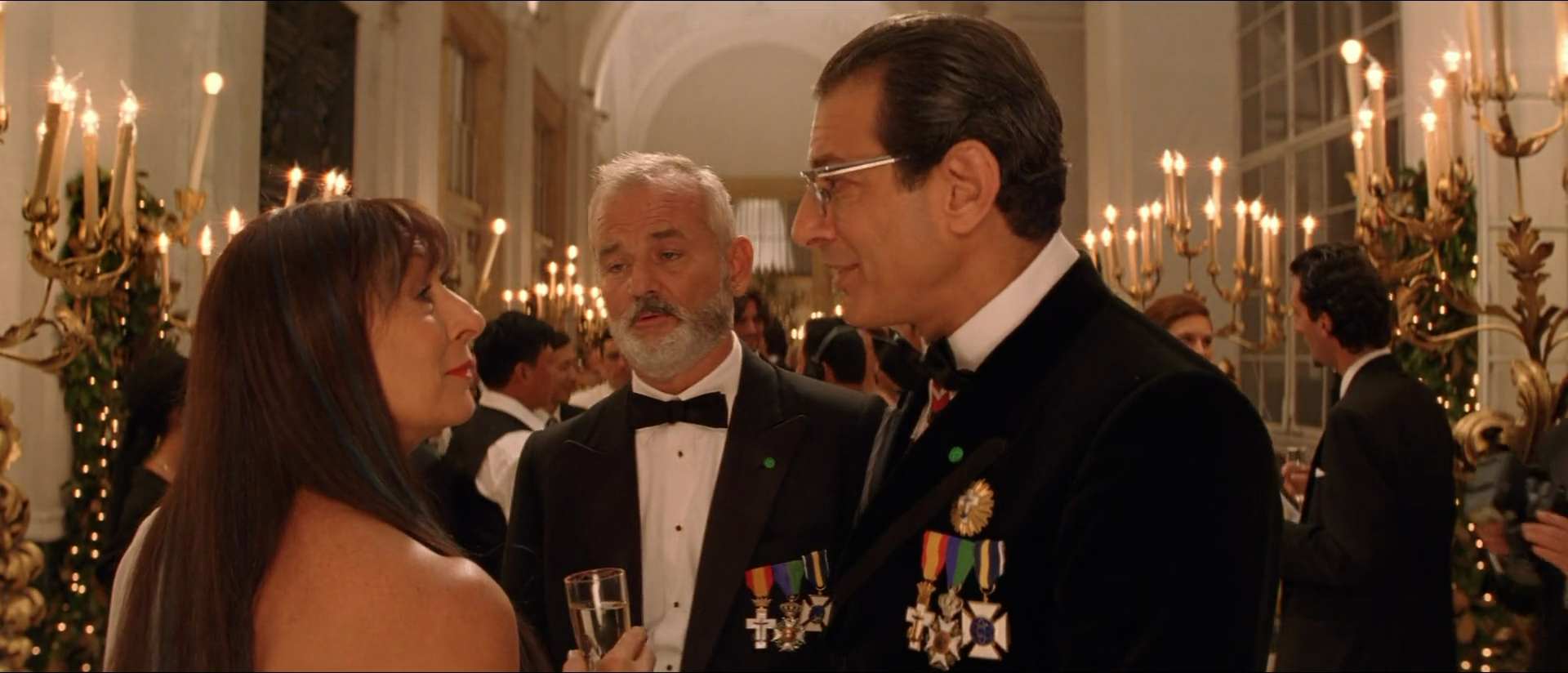
Rice was also a member of The Explorers Club. Fawcett and Cousteau were not. We see a club with nearly this exact name in the film.
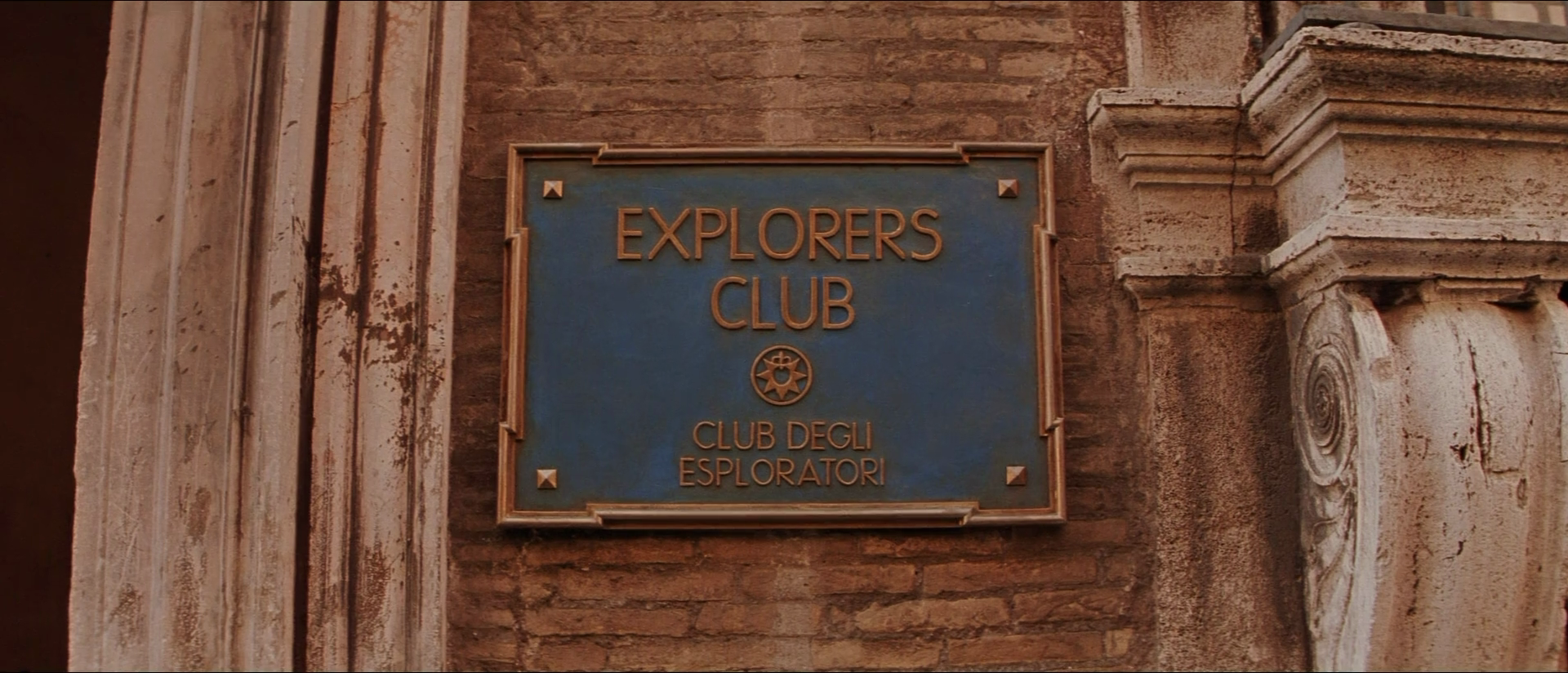
Look closely at the world Anderson and Baumbach built on screen. The aesthetics of the Explorer's Club and the lecture theater in The Life Aquatic don't evoke Cousteau's modern, mid-century world. They evoke Fawcett's. The wood-paneled, globe-filled, Belle Époque halls of the Royal Geographical Society are basically seen on screen as the Explorer’s Club.
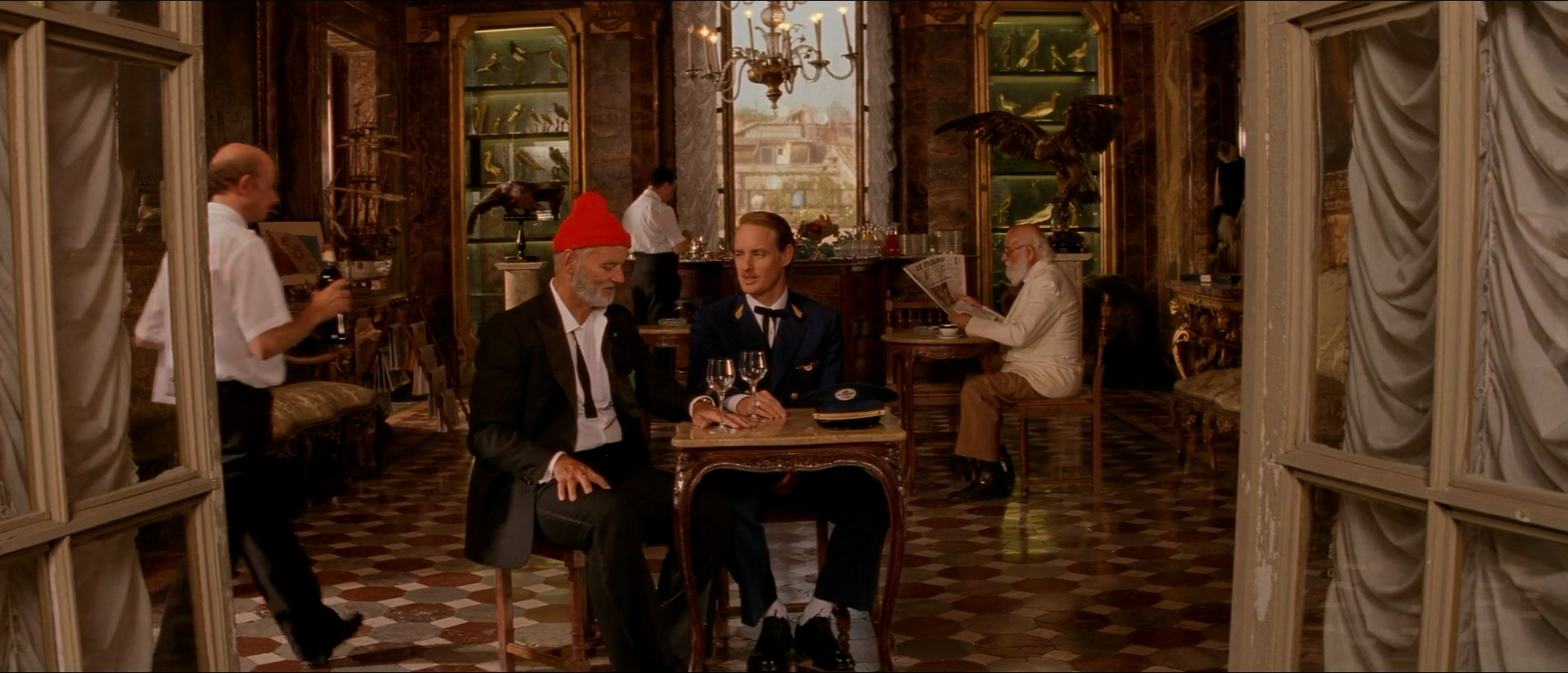
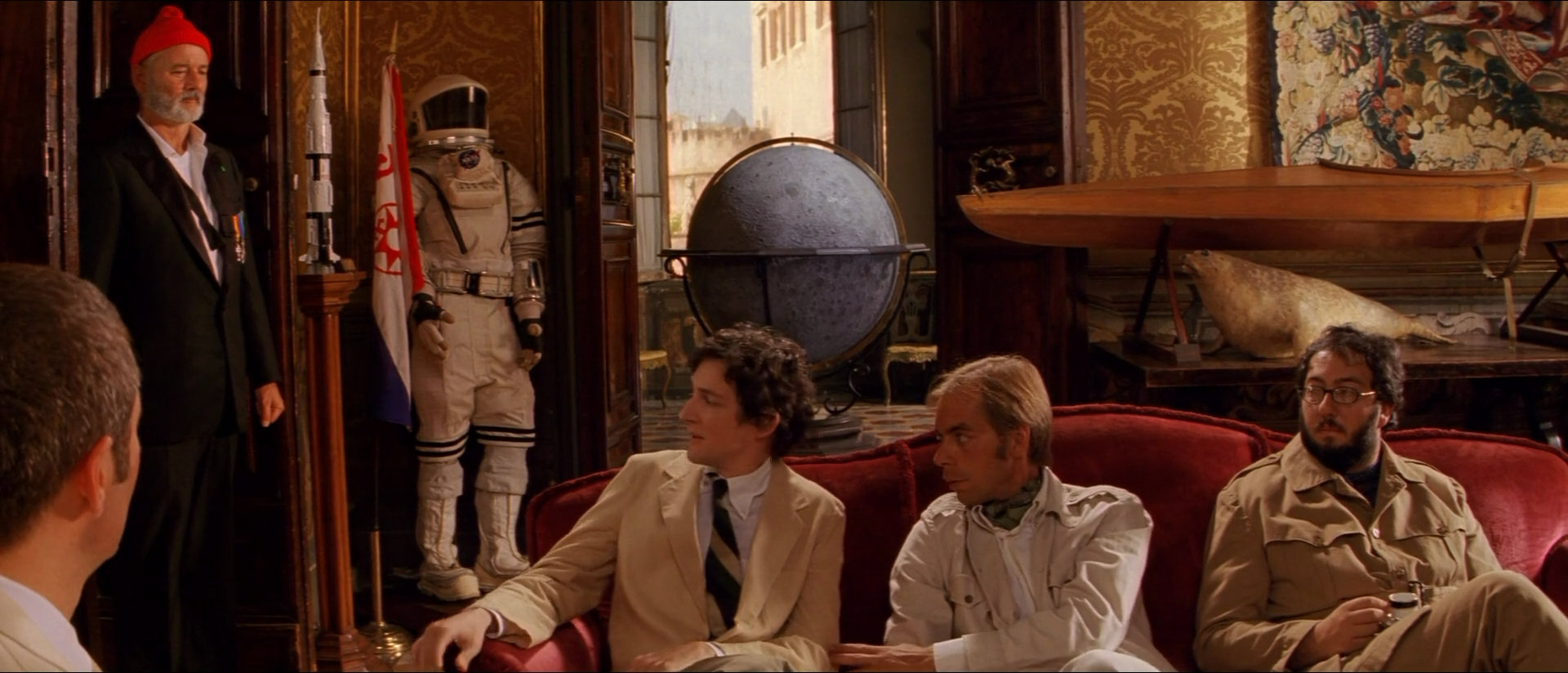
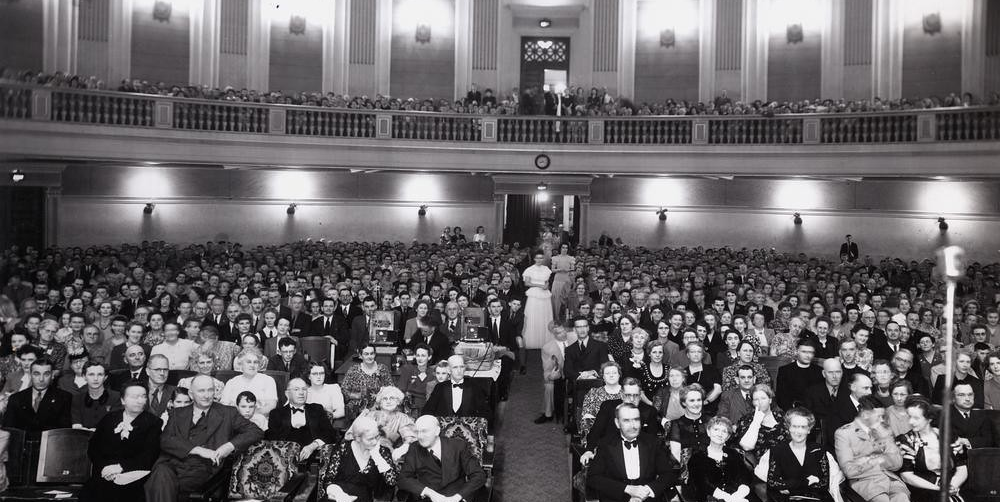
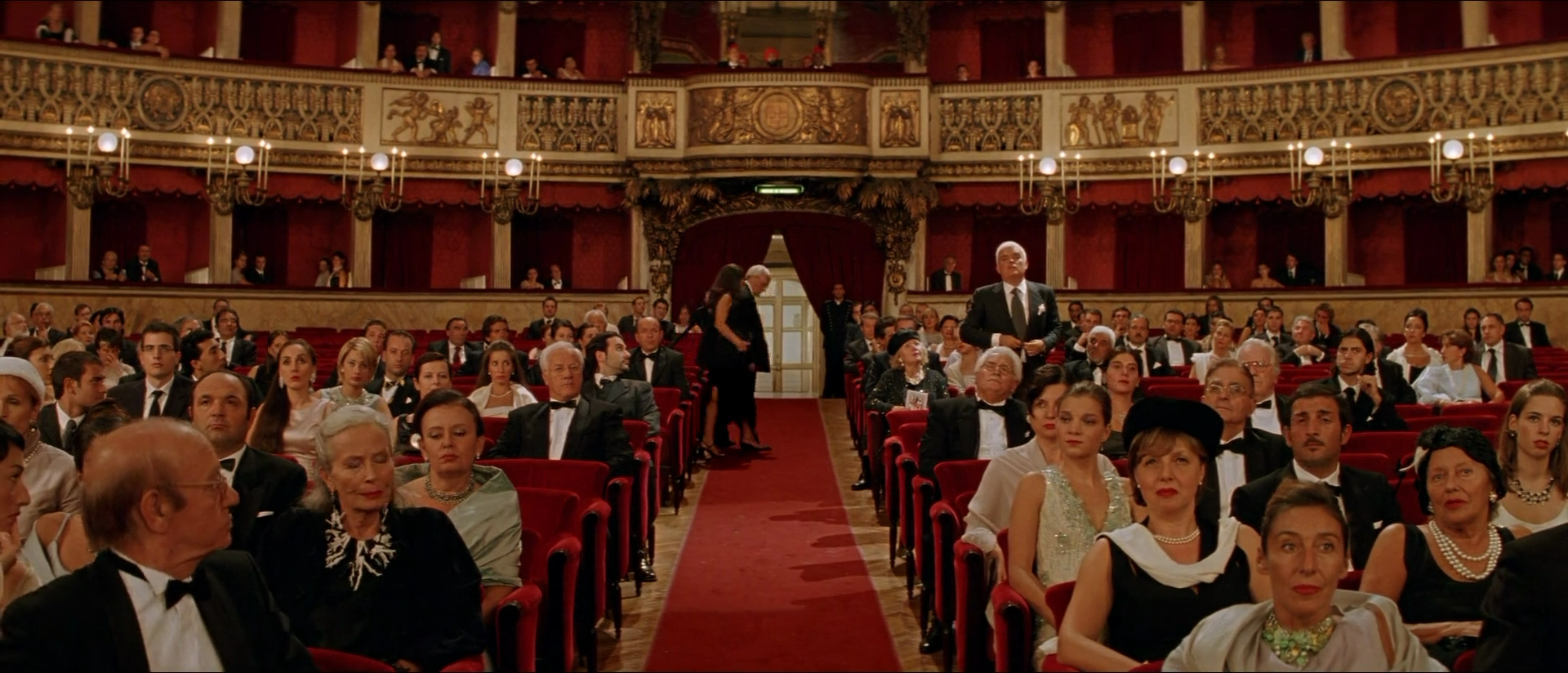
The theater scenes in the film show us Baroque ornament, Second Empire gilding, and Belle Époque grandeur. All of these belong to the period between 1870 and 1914. Fawcett's era, not Cousteau's.
Each interior space in these scenes reads as late 19th to early 20th century continental Europe: fin-de-siècle scientific salons, gilded frames, patterned wallpaper, formal seating. This is the world the Royal Geographical Society inhabited when Fawcett was giving his lectures and Rice was writing his biggest checks. And yet the film doesn't treat these spaces like museums. They aren't dusty and worn. Every character in foreground and background looks natural in that scenery. The characters sort of time-travel to the early 20th century.
It is emphatically not the world of Jacques Cousteau.
Obsessed to Death
Exploration cost Fawcett dearly. Men and animals died on his expeditions. His obsessive drive to find Z pushed companions past their physical limits. His poor (literally) wife and children barely saw him. On the final expedition, Fawcett led his own son to his death.
Zissou's world mirrors this toll. Esteban is killed by the Jaguar Shark in the film's opening. An intern is shot. Ned’s heart stops briefly. A bond company stooge is brutalized. And most importantly Ned, Zissou’s alleged son, dies during the final expedition.
Are you seeing this? Zissou and Fawcett both cause the deaths of their sons? On the final expedition to find their white whale? Come on!
Worth noting - Cousteau's son Philippe died in a seaplane accident in 1979. But Philippe's death was an accident and not on one of his father's expeditions.
Desertion
Mutiny and desertion are events in Percy Fawcett's jungle world and on the Belafonte. Not so in Cousteau's life.
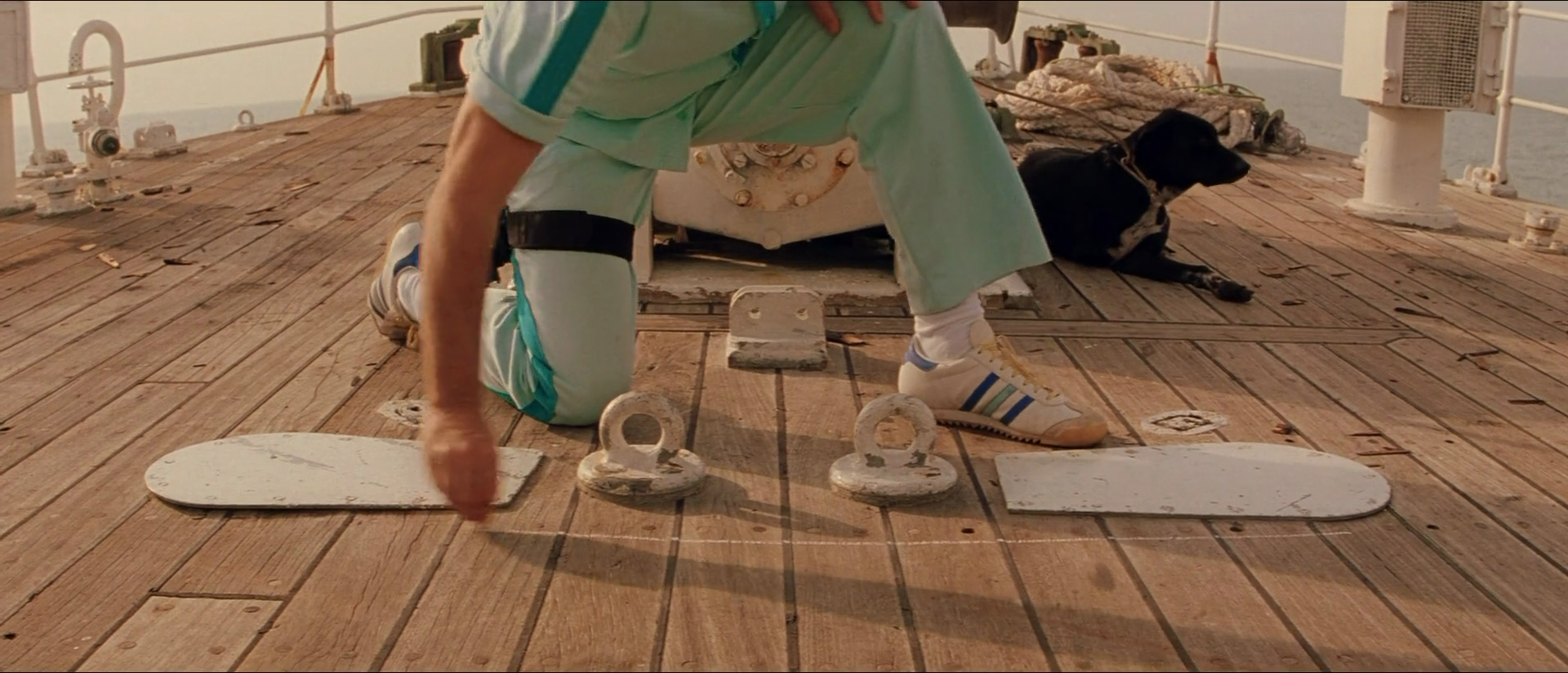
Fawcett's expeditions were plagued by insubordination. His crews — underpaid, underfed, and dragged deeper into the jungle by a man they increasingly thought was insane — repeatedly threatened to abandon him or worse. On the Belafonte, the unpaid and less devoted members of Zissou's crew walk out on him mid-expedition. Cousteau, by contrast, ran a tight ship with a loyal, well-funded crew for decades.
Grann tells us part of the reasoning for Fawcett recruiting his young son Jack for the final expedition is that he won’t mutiny. The experience and thought of mutiny haunted Fawcett.
Now, for the first time, the thought began to take hold: If only my son could come. Jack was strong and devoted. He would not complain like a pink-eyed weakling. He would not demand a large salary, or mutiny. And, most important, he believed in Z. "I longed for the day when my son would be old enough to work with me," Fawcett wrote.
— David Grann, The Lost City of Z
The mutiny scene in The Life Aquatic is drawn from the Fawcett inkwell, not the Cousteau.
During the first European expedition down the Amazon, in the early 1540s, members were accused of deserting their commander in the "greatest cruelty that faithless men have ever shown." In 1561, members of another South American expedition stabbed their leader to death while he slept, then, not long after, murdered the man they had chosen to replace him. Fawcett had his own view of mutiny: as a friend once warned him, "Every party has a Judas."
— David Grann, The Lost City of Z
Now read "Every party has a Judas" in Zissou's voice.
Is the Camera Rolling?
Fawcett knew how to use the press. He gave them fantastic material and in return he got publicity that he could turn into funding for future expeditions.
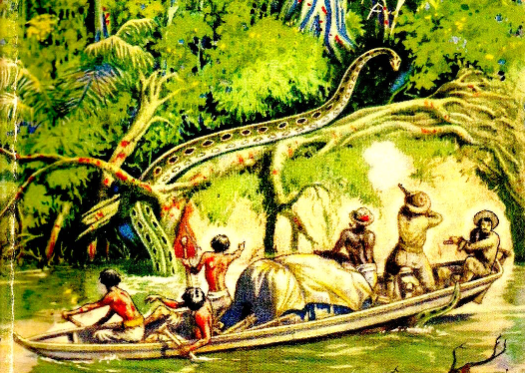
While on expedition in 1907, he claimed to have seen and shot a 62-foot giant anaconda — a claim for which he was ridiculed by scientists. He reported other mysterious animals unknown to zoology, such as a small cat-like dog about the size of a foxhound and the giant Apazauca spider, which was said to have poisoned a number of locals (per Wikipedia).
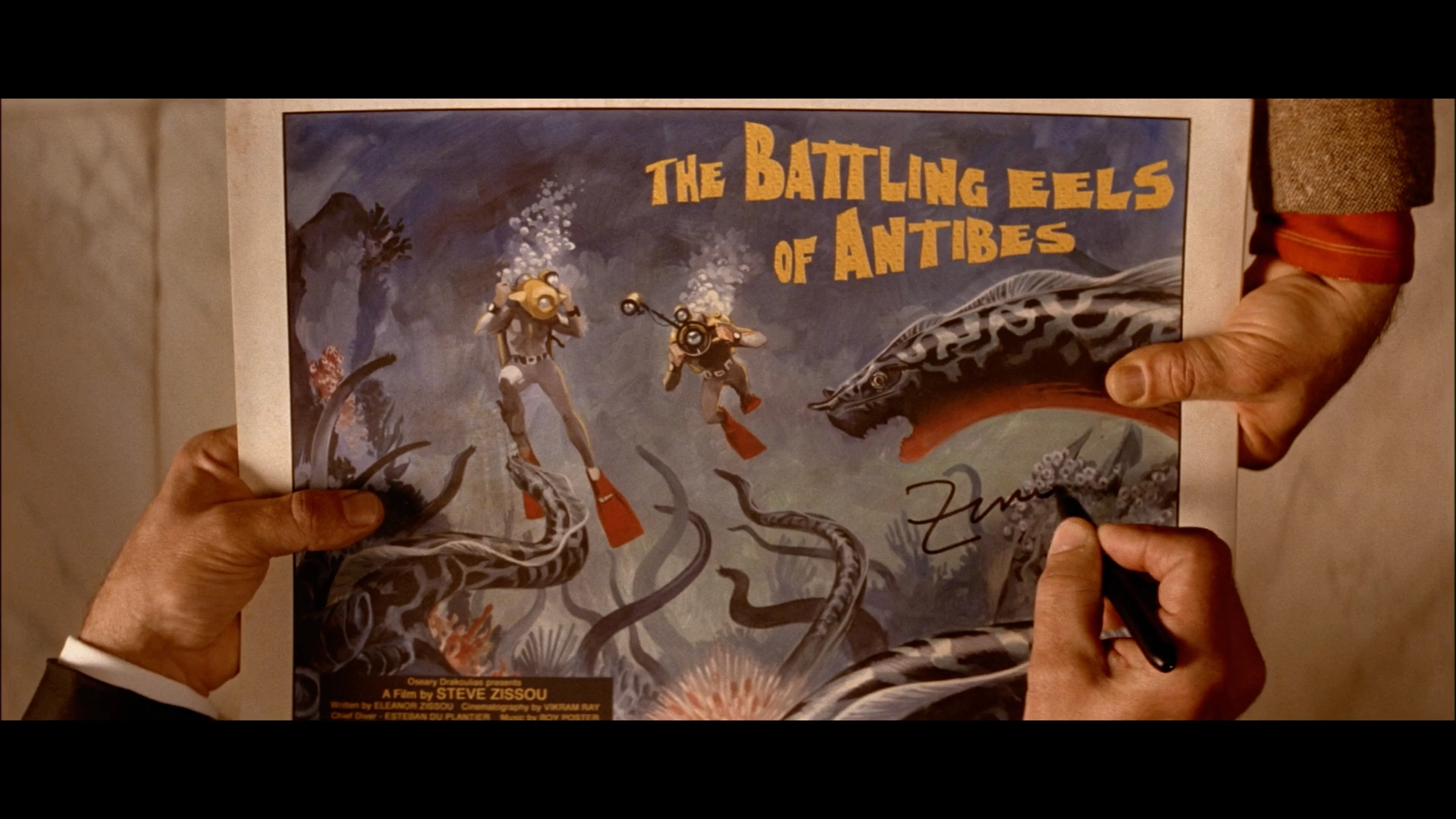
Zissou is a mix of Fawcett and Cousteau in this area. He films and produces films on the Belafonte exactly as Cousteau did on the Calypso. On the other hand, as seen through his movie posters, he will use sensationalism to sell his films. Not as Cousteau-like.
Hostages!
"Hijackers!" "Out here we call them pirates."
In The Life Aquatic, Zissou and his crew are captured and bound by pirates. Zissou (Papa Steve) whispers to his crew: "Don't do anything until you see me make a move."
As told in The Lost City of Z, James Lynch, a Brazilian banker who set out to find Z, is taken captive by indigenous warriors along with his son. Grann writes: "He squeezed his son's hand. 'Whatever happens,' Lynch whispered, 'don't do anything unless I tell you.'"
A father figure, bound by captors in a hostile landscape, whispering to his companions to hold steady. Coincidence? Inspiration?
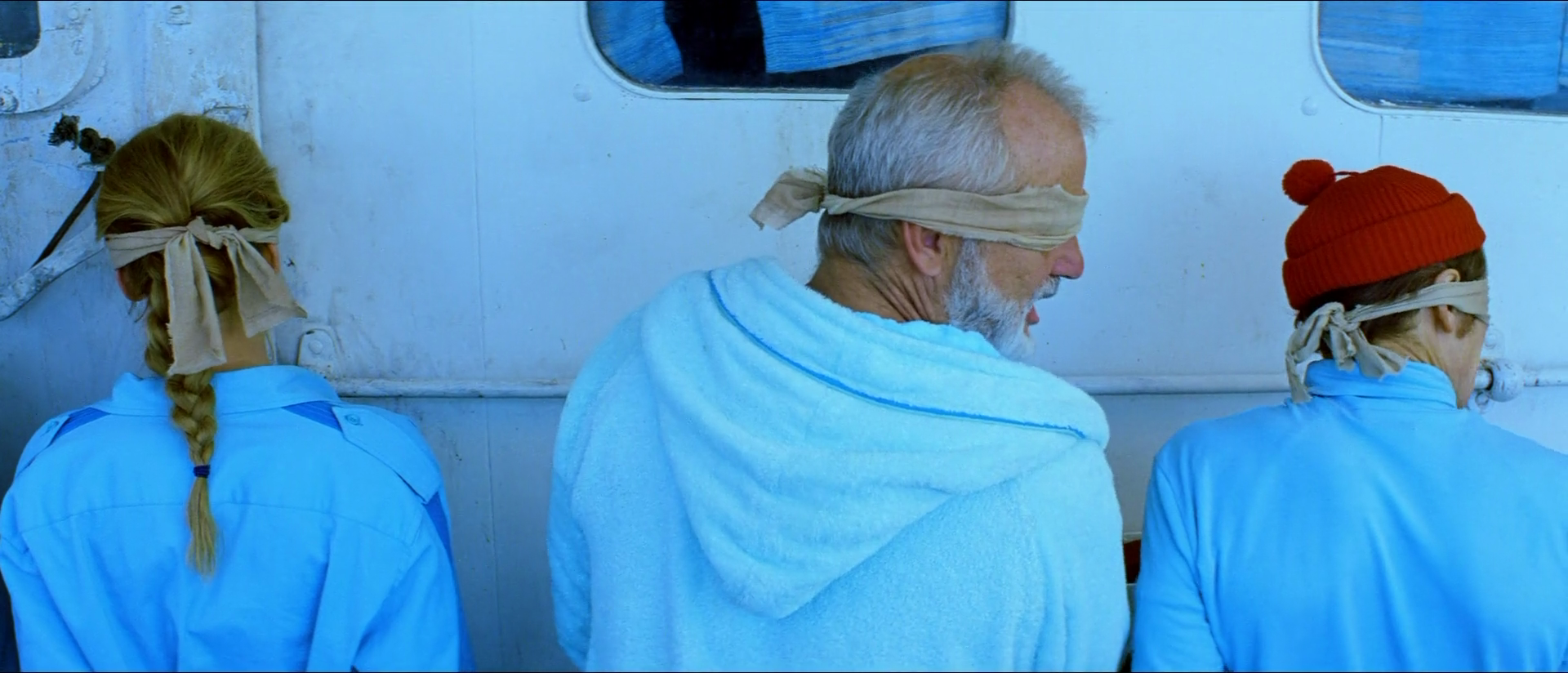
Kingsley
This is the clue that made me sit up in my seat and say “Alright, something is afoot here.”
Even though it's a brief mention, David Grann in The Lost City of Z mentions Reverend Charles Kingsley (1819–1875). Kingsley was a Victorian clergyman, natural historian, and travel lecturer deeply involved in the British popular imagination of exotic exploration.
Do we know any other Kingsleys?
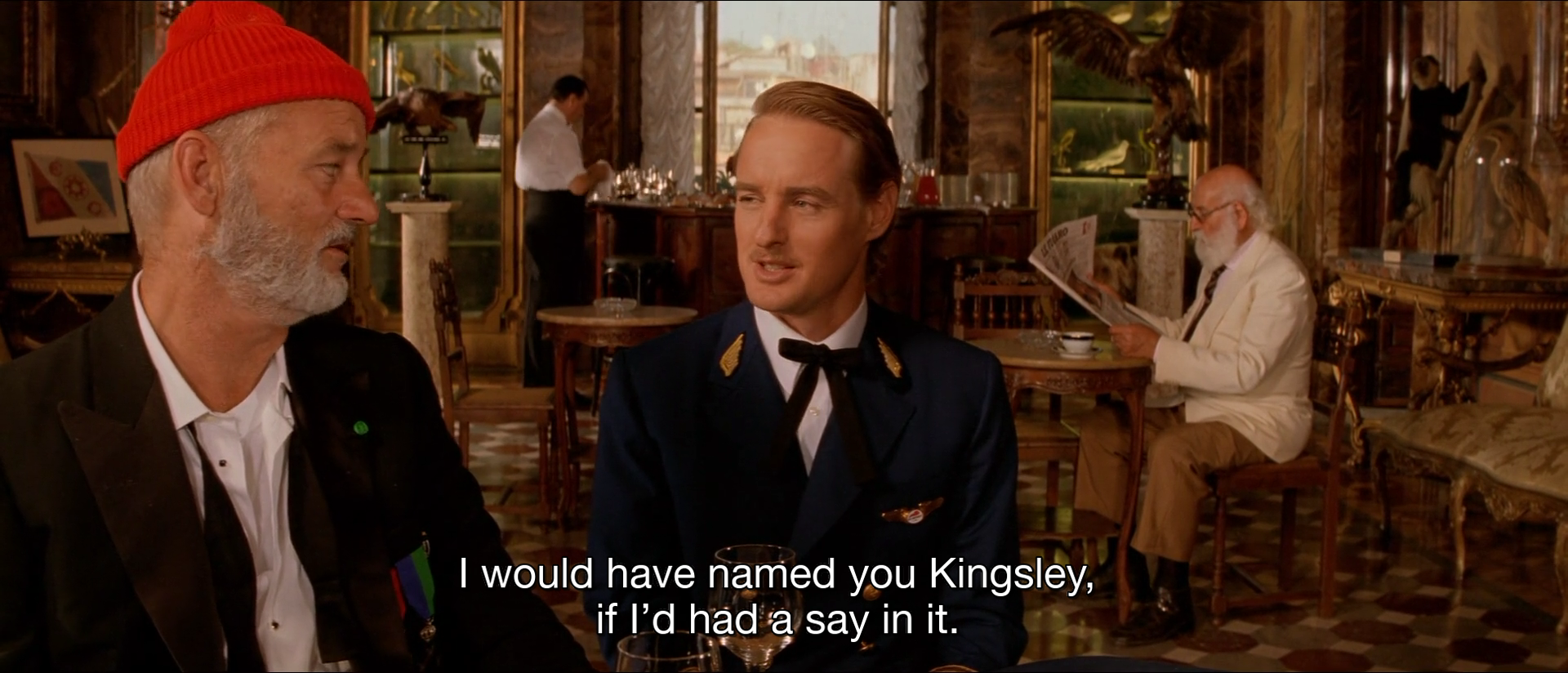
"I would have named you Kingsley" is one of my favorite lines in the film. It's such an odd pull. An incredibly rare, Victorian-sounding name. If we assume Ned was born in the 1970s, he would have been one of maybe 100 people in the United States given the name Kingsley in that decade. It is too rare to be a coincidence. Anderson and Baumbach had to be mining the late Victorian explorer material for inspiration.
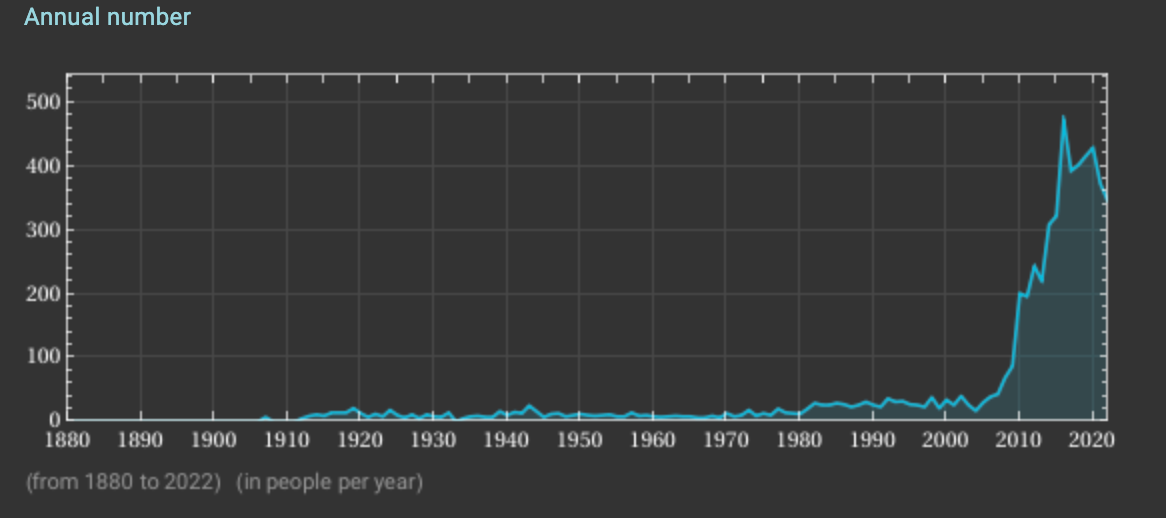
Do YOU know any Kingsleys, at all, anywhere? It's statistically improbable that you do!
The Anachronism
Jacques Cousteau: b. 1910 – d. 1997 • Percy Fawcett: b. 1867 – d. 1925 • Dr. Rice Jr.: b. 1875 – d. 1956
At sea, nearly everything we see on screen smacks of Cousteau. The Belafonte is the Calypso. The submarine Jacqueline Deep Search is Denise. It's 1975 at sea.
On land, we see Late Victorian Europe. Why? It's canonically the 2010s. We don't see any set that feels like the modern day. On land it's all Fawcett-core. 1900. Turn of the century. Pre-Great War.
At sea, Zissou is Cousteau: the red cap, the ship, the submarine, the documentary crew. But below the red cap, in the head and the heart, he's Fawcett. His rivalry, obsession, character flaws, the death of his son, the clubs, the name he would have given his child – it's pure Percy Fawcett.
So?
It could all be coincidence.
Maybe Anderson and Baumbach read Grann's book or New Yorker article. The timeline makes this unlikely:
- 2004 The Life Aquatic is released.
- 2005 Grann in the Amazon researching.
- 2009 The Lost City of Z is published.
Were they independently aware of this obscure history? Fawcett and Rice's story was not floating in the zeitgeist in the early 2000s as far as I can tell.
This leads us to the possibility of direct transmission:
In the small town of New York City, where all three writers lived, and everyone knows everyone, was a rough draft of Grann's New Yorker article shared with Anderson and Baumbach?
I aim to find out. I will update this page if I hear back from Anderson, Baumbach, or Grann.
Sources, Copyright, and Attribution
- David Grann, The Lost City of Z: A Tale of Deadly Obsession in the Amazon (Doubleday, 2009).
- The Life Aquatic with Steve Zissou (2004), directed by Wes Anderson; screenplay by Wes Anderson and Noah Baumbach; distributed by Buena Vista Pictures.
- Ryan Leston, "Jeff Goldblum Had An Interesting Perspective On His Life Aquatic Character," SlashFilm, April 8, 2022. Link
- Ben Brader, "Explorer Hass was rival of Jacques Cousteau," The Bend Bulletin, July 7, 2013. Link
- Percy Fawcett reference background: Wikipedia
- Alexander Hamilton Rice Jr. reference background: Wikipedia
- Royal Geographical Society lecture audience image metadata and provenance: Wikimedia Commons
- David Grann, "The Lost City of Z," The New Yorker, September 19, 2005. Link
.jpg)
Image Notes
- Film screenshots/stills are from The Life Aquatic with Steve Zissou and are included here for commentary/criticism.
- The Hennessey couch still was sourced from local files associated with the Ryan Leston SlashFilm piece above; image credit on that page is Buena Vista Pictures.
- Historic exploration images are used as cited in the source list.
- RGS lecture audience photo: Photographer unidentified, H. B. Green & Co. Location: Brisbane, Queensland, Australia. Date: 18th November 1946. Wikimedia Commons.